Blog

  • World Tour of London announced!!

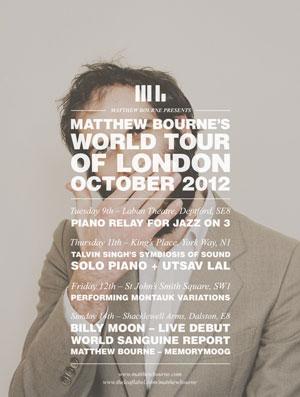
    It’s been a long time since the last news bulletin BUT we have great pleasure in announcing Matthew Bourne presents Matthew Bourne’s World Tour of London. There will be four shows around the capital between October 9 and 14.

    So, the idea behind these shows was to do something slightly different for each performance – kicking off on Oct 9 at Laban Theatre, Bourne will be playing a series of piano duos and taking part in a piano ‘relay’ which will be broadcast on BBC Radio 3’s Jazz on 3 show at a later date.

    Show number two, on Oct 11, forms the opening night of Talvin Singh’s Symbiosis Of Sound festival at King’s Place. A sonic exploration of the piano alongside Ustav Lal and a pre-concert introduction from Singh.

    A performance of Bourne’s recent Montauk Variations album at St. John’s Smith Square is the penultimate date of the tour on October 12th.

    A debut performance of Billy Moon, preceeded by a solo Memorymoog set AND a set from Andrew Plummer’s World Sanguine Report at the Shacklewell Arms rounds up this trailblazing World Tour of London on October 14th. This is a free gig BUT YOU WILL STILL NEED A TICKET – make sure you click HERE to get one!!.

    Check out the live page for full details and ticket links.

    Don’t forget to sign up to the newsletters for more updates and information about upcoming events!

    In honour of the World Tour of London and this Jubilee year, Bourne pays tribute to our reigning monarch with this rendition of God Save The Queen…

  • COLLIDER


    The idea for COLLIDER came to Chris Sharkey in a dream he had – and wrote to all of us, explaining what he’d heard in the dream and that we (myself, Chris, Dave Kane and Chris Bussey) should all meet up and record/play regularly. So, we did – and still do. Yesterday, COLLIDER released an ep, Nantbach & Sandwich – which is available as a FREE download. These recordings are the culmination of the first of those sessions (and there are more awaiting release). Please, help yourself and share with your friends, too!!

    Also, last night (September 3rd), an exclusive COLLIDER session for Jazz on 3 was broadcast. If you missed it you still have seven days to listen to it as much as you like. As Phoenix studios are based within the Pinewood Film Studios complex, some of us were lucky enough to meet Russel Crowe, who was filming for Les Miserables, next door. Whilst outside, doing his vocal warm-ups, I invited him to join us in the studio if he got finished early. I guess he didn’t get finished early. In any case, we were told not to encourage him to sing…

    Anyway, The idea of this band was to act as a kind of foil to much of the musical activities we’d all found ourselves getting into over the last few years – namely, less and less improvisation and/or, playing in more structured/organised/composed musical settings. Great, but COLLIDER represents a collective acceptance that all we really want to do is just to turn up, chat, and play music without having to think too hard about what we’re going to do – for me this is the exact opposite to many working situations I have found myself in over the last few years! Inevitably, much of what we do end up doing is a LOT of fun – and I think that’s the point, right? If one loses sight of that, or loses sight of why they’ve ventured into music in the first place, it can be a desolate place…

    SO, please go to the COLLIDER website and download your free ep. I am grateful to Chris for his dream and then pulling myself, Dave and Chris together – it is a band that exists out of a shared need to just turn up and play – and because we LOVE it. X

    All photography: RAY KANE


  • 1912011047 – for Amy Walker

    Dedicated to an old and dear friend of mine, Amy Walker; the next instalment to the Private Archive is long overdue. On hearing 0504012030 – for John Zorn & Mike OsborneSteve Shepherd, then programme editor of Jazz on 3 (now as the force behind True Stories Told Live – based in Cardiff), invited me to record a session at Gateway Studios, Kingston. I couldn’t believe it. I’d send Steve stuff from time to time but I guess something clicked into place with 0504I had done an extended performance of the aforementioned at the 2001 London Jazz Festival, so wanted to do something different for this session. It was bassist and composer, Riaan Vosloo, who introduced me to many of the samples I used in this piece – most of them found within his video collection. In fact, if it weren’t for Riaan, I wouldn’t have had a sampler to put them in. So, Riaan showed me how to work his Boss SP-303 Dr. Sample and away I went. The piece was recorded in a single take. Yours, at just a few clicks away for the bargain price of only £1.99!

    1912011014 - for Amy Walker

    For years afterwards I believed that I would never better this piece and it is still amongst the few things I am most proud of and was something of a breakthrough for me at the time. So, I am indebted to Steve Shepherd, recording engineer Steve Lowe and Jez Nelson at Jazz on 3 for recording and broadcasting this work. Below (if you’re REALLY interested) is an excerpt from my extremely unemotional PhD Commentary, which details various bits and pieces that I’d completely forgotten about…

    Preparation

    Generally, the amount of preparation for each of the works is dependent on the circumstances around which the performance takes place, e.g., time frame, type of venue, time of day and most importantly how much notice is given prior to the performance date (these factors and their ramifications are discussed individually for each of the works). In the case of this work the preparation time was approximately two months. An approximate time frame of 30 minutes was given for the performance. Steve Shepard had originally asked if I would repeat the performance I had given at the finals of the Perrier Jazz Awards earlier in the year. I declined, and explained that I would create a new work especially for the session. The first visualisations to occur probably involved the various piano textures I had discovered through practice or listening to various compositions. For this work composers include: Morton Feldman, Alberto Ginastera, John Zorn, Maurice Ravel, Michael Daugherty and Gerald Finzi. These references are scattered throughout the work. Specific musical examples from particular works will be illustrated in Appendix I of this document. Other textures of my own devising include a somewhat brutal take on George Shearing’s block chord style.

    Other compositional materials include Mike Osborne’s All Night Long heard at the beginning of the work. Later, John McLaughlin’s Binky’s Beam is developed in tandem with samples from The Wizard of Oz and Withnail and I (discussed under Execution and Analysis). Somewhere Over the Rainbow is also given an individual reading. Extraneous elements for this piece included Birdcalls: Cuckoo, Nightingale and Duck. A toy wind organ and various ‘animal’ noise pots along with a whoopee whistle. Pouring ice water into a glass and voice were also used.

    Probably the first sample idea came from a conversation with a colleague [Riaan Vosloo] about a quote from the film One Flew Over the Cuckoo’s Nest – the substance of this quote providing a near perfect analogy to the way in which my solo performances and indeed this performance was going to work. Other samples were taken from the following sources: Derek and Clive LP – Come Again, Gerald Finzi’s Introit for Violin and small orchestra, Bruce Robinson’s film Withnail and I, Jack Jones LP – Sings the Music of Michel Legrand and The Wizard of Oz. Samples taken from The Wizard of Oz arose from pure chance, as the video just happened to be ‘lying around’ at the time. These samples, for me, seem to contribute an uncanny poignancy to the work. Once these fragments were loaded into the sampler, experimentation could begin with the layering of one sample over another. Once certain combinations had been found, a balance between the samples, extraneous elements and the piano textures began to form a framework.

    Execution & Analysis 

    This performance took place at Gateway recording studios in London. The studio setting provided relief from the common anxieties that are usually present before a live performance. With the availability of the studio for most of the day, the atmosphere and preparation surrounding the performance was relaxed. Around 10 minutes before recording, the framework was written out for reference (I’m stunned that this actually exists at all):

    The Work

    ‘00,00 – 00,01’: While anticipating the start of the recording I had a sudden urge to begin the performance with the Cuckoo call. This became a theme that recurs throughout the work, and also relates very appropriately to samples from One Flew Over the Cuckoo’s Nest. This is accompanied by a looped percussion sample providing a rhythmic momentum.

    ‘01,29 – 05,06’: Descending single notes from high to low register increasing in intensity sandwich the development of Mike Osborne’s composition All Night Long.

    ‘05,07 – 06,38’: Here, a short improvisation and formation of a spontaneous riff ‘persists’ despite the regular interruptions of Derek and Clive. This had been the intention of my original visualisation.

    ‘06,39 – 07,08’: A sporadic development of a piano texture borrowed from John Zorn’s composition Le Momo, until interrupted by the theme tune from the American T.V. series Cheers. This particular exploration indicated two things: that future practicing of this technique would improve the fluidity of execution (a factor present in the original composition), and enhanced stamina would be an apposite requirement if I were to develop this texture over a longer period of time. This was developed and explored in the Magic Mirrors and Bath Solo performances discussed later.

    ‘07,16 – 07,59’: A development section consisting of rapid activity at either end of the piano combined with mid register Ginastera-like sonorities leading into a short passage of rapid high register activity.

    ‘08,09 – 11,13’: The opening motif from Michael Daugherty’s Tombeau de Liberace is explored at length. The resulting brutal and energetic ‘stride’ rendition of this motif becomes more sporadic until an appropriate sample from Withnail and I is triggered allowing the release of tension to be carried by Finzi’s Introit for Violin and Orchestra.

    ‘11,14 – 11,55’: This section is an illustration of a visualization occurring during the performance. Layering the earlier Cuckoo’s Nest sample over Finzi’s Introit, coupled with the Cuckoo call created a layering of sentiment (Absurd, sublime, farce).

    ‘11’56 – 13,38’: A further example of a visualisation that occurred very early on in the preparation stage. Originally I had intended to spit a mouthful of water and laugh violently at the entrance of Jack Jones, but somehow the situation seemed to suggest that a more macabre approach was required – hence the screaming. The irony of this section is that I am actually very fond of the Jack Jones LP, but my commitment to trusting the visualisations meant that I was bound by this particular direction.

    ‘15,22 – 16,31’: Sonorities recalling Morton Feldman’s Piano and Orchestra are explored.

    ‘16,32 – 17,00’: An example of a sample found by accident whilst looking for others. This snippet of dialogue was just begging to receive the treatment illustrated here.

    ‘17,01 – 23,00’: This section explores John McLaughlin’s composition Binky’s Beam in tandem with samples from Wizard of Oz and Withnail and I. While searching for Somewhere over the rainbow I stumbled on a clip where the words ‘follow the yellow brick road’ had the same rhythm as ‘get in the back of the van’ from Withnail. During the performance these are looped which illustrates this connection. Moreover, there are three notes accompanying the Wizard of OZ sample that are almost synchronized in dialogue with the bass line from Binky’s Beam, again a connection that was not evident during preparation.

    ‘24,21 – 25,47’: The use of the sampler here demonstrates to great effect the ability to combine sentiment with cult humour in altering the aural perception of these fragments – potentially manipulating a listener’s emotional response to sentiments that are now ‘out of focus’.

    ‘25,47 – 26,52’: Here begins the reference to Shearing’s block chord style mentioned earlier. Owners of the Sony J5e mobile phone will be able to recognise the Blueslite ring tone taking on a rather more aggressive form.

    ‘27,03 – 28,24’: At this point, bass sonorities and a repeated-note motif recall Ravel’s Le Gibet. This occurred as an afterthought – leading to the iced vodka shocks of a re-harmonised Somewhere Over the Rainbow. This harmonisation was originally intended to follow the ‘I’m going to be a star…’ sample.

    ‘28,29 – End’: The end of this work develops the ‘hanging’ theme of Le Gibet. The last of the samples from Wizard of Oz is heard before fading out. An intuitive decision to close the performance with the final statement from the Cuckoo call brings the work full circle.

    This work is perhaps the most well balanced of first three presented here in terms of the variety of the samples chosen, and how well these complement the piano textures and extraneous elements. The overall effect of this work displays a consistency in the balance of humorous and serious events, the high intensity of both qualities emphasising these events with clear distinction.”

    Session Gallery (pictures by John Eccleston) (note the Tommy Cooper T-Shirt and Bontempi wind-powered organ to my left…)

     (microphone test: iced water)

      (with Steve Shepherd)

    (and no, that’s not a cigarette of ANY kind…)

    1912011047 – for Amy Walker – Work Reference List

    Visual Media

    One Flew Over the Cuckoo’s Nest, Milos Forman, Fantast Films/United artists, 1975 (Warner Home Video, 1997)

    Withnail & I. Bruce Robinson, Hand Made Films, n.d.

    The Wizard of Oz, Richard Thorpe, King Vidor, Warner Bros., 1939 (Warner Home Video, 1997).


    Sound Recordings

    Cook, Peter & Moore, Dudley. Derek & Clive – Come Again, Virgin, n.d.

    Finzi, Gerald. Introit, from Finzi Clarinet Concerto, Lesley Hatfield, Northern Sinfonia, NAXOS, 1995.

    Jones, Jack. Jack Jones Sings Michel Legrand, RCA, 1971.


    Scores & Musical References

    Daugherty, Michael. Tombeau De Liberace, Faber Music, 1996.

    McLaughlin, John. Binky’s Beam (Transcribed from Sound Recording: Extrapolation,

    Marmalade, 1969).

    Osborne, Mike. All Night Long, (Transcribed from Sound Recording All Night Long,

    Ogun Records, 1976).

    Portonoy, Gary & Hart Angelo. Theme from Cheers, (Transcribed from memory).

    Ravel, Maurice. Gaspard de la nuit, ed. Dover, 1986.

    Zorn, John. Le Momo, Carl Fischer, 2001.
  • Working with Sam Hobbs: reinterpreting Amon Tobin…

    My relationship with The Leaf Label began in earnest earlier last year and within the space of the last twelve months or so, a constant stream of potential projects and other creative ideas have been fed into my consciousness. So, when Leaf called with the proposition of remixing an Amon Tobin track for his new, eponymously-titled boxed set as part of a series of commissions from Ninja Tune (other commissioned artists include Julia Kent, Pete Wareham, Bibio and Austin Peralta – to name but a few!);

    my very first thought was that I would accept but am certainly no savant when it comes to using music sequencing programmes (Logic/Pro Tools/Ableton et al.) that are considered de rigueur for this sort of task. My very next thought was to call long-time musical collaborator and close friend, Sam Hobbs – to see if he wanted to collaborate (who’s intuitive skills at the helm of Logic, incidentally, are superb). Sam is one of the few people I can trust both musically and personally. His is as skilled a sound engineer as he is a musician and, like all creative artists, is constantly furthering his own personal boundaries. Whether it’s developing new drum techniques to enhance and fulfil musical ends, or capturing the best sound possible through restless research and experimentation; Sam’s passion and enthusiasm for sound make him a valuable musical ally (and arguably possesses some of the best listening ears in the business). In addition to all of this, Sam has been a huge fan of Tobin’s for many years whereas I am a relatively recent convert – all the same we were both looking forward to getting stuck in. Our initial brief was to try and create a ‘contemporary classical’ reworking of one of any track of our choosing from Tobin’s most recent album ISAM.

    After some initial thought as to the approach we might take (and choosing not to use any of the original mix stems), we decided to keep it simple(!) and to figure out how to reconfigure Tobin’s rich, detailed sound world by reinterpreting ALL of the sounds acoustically – that is to say, we would try to find ways of creating acoustic renderings of our chosen track, which initially turned out to be Lost & Found. 


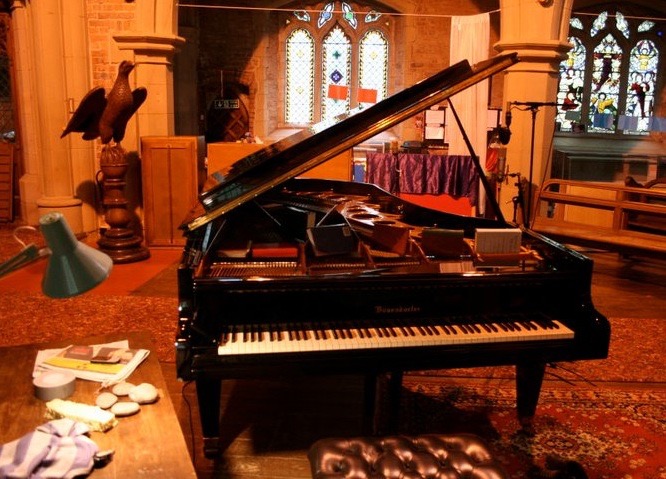
    We chose to reinterpret much of the tonal and melodic material using a standard midi piano patch (found within Logic) and various layered cello parts (albeit with a complete re-reading of the original harmony) via an old valve tape machine… The only stumbling block was how to interpret the rhythmic parts. We then remembered that, during the second recording session for the Montauk Variations album at St. Margaret’s Rectory, Manchester, we’d amassed a vast catalogue of unfinished ideas that involved placing a variety of objects inside the piano that were found within the church, such as an assortment of large/small hymn books…

    books-ii

    Using Tobin’s original track as a kind of musical template/blueprint/score, Sam carefully mapped-out the original track’s tempo and duration. Once this was in place we could set to work, making the discarded sessions from Montauk our first port of call, then listening to the material and piecing together the various sounds/rhythmic textures alongside Tobin’s near-impossible detail.

    In addition to the percussive effects of the book-prepared piano, the inimitable voice of Emily Levy also features in the final refrain of the melody and in the initial section of the ‘coda’. This section also features some medium-to-large-sized pebbles, placed on the strings of the piano. These were found lying around in St. Margaret’s – and became the basis for One for you, Keith, (found on Montauk), as it was pianist and composer, Keith Tippett, who first introduced me to using objects such as stones/pebbles to create different colours and textures…

    After we’d finished Lost & Found, we decided to keep going and give the same treatment to the brief (but no less beautiful), Piece of Paper, whilst we were at it


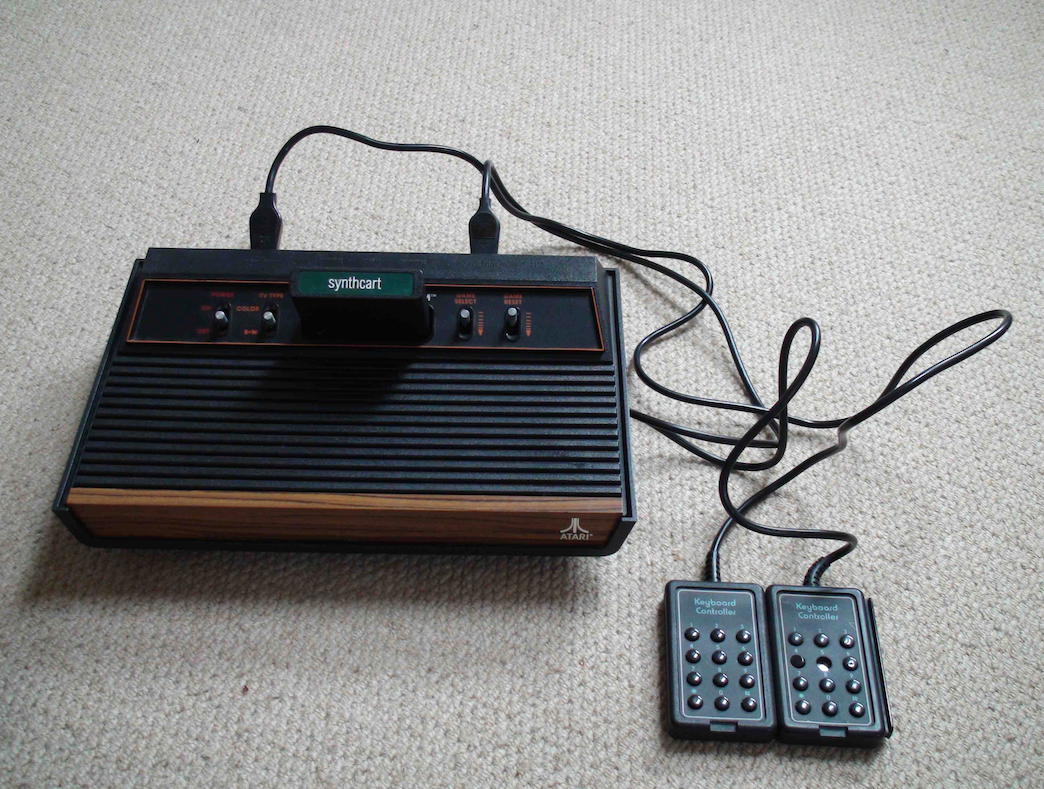
    As in Lost & Found, some of the harmonic passages in Piece of Paper were not so much re-read but replaced completely with Lutoslowski/Scott Walker-like string passages, created by layering a number of cello parts of approximate tuning within a limited pitch range to create a texture of microtonal dissonance. Anyway, we followed a similar procedure to Lost & Found, only this time we extended the track’s original length slightly, with the aid of some more thumped/abraded/book-prepared piano, bowed cymbals AND some 8-bit technology in the form of a circuit-bent Atari 2600 games console (from 1977) that I bought from Franck Vigroux

    screen-shot-2016-11-27-at-13-38-20

    So, it was a real honour to have had both tracks selected for this incredible boxed set and hopefully we’ve managed to create something that somehow bridges the gap between Tobin’s sonic brilliance, modern technology and analogue recordings of C20 classical chamber music. Maybe…


    You can purchase Amon Tobin from the Ninja Tune website. Go on.


  • #MySharona

    Last week I learnt that my music (the entire catalogue, by implication) is apparently reminiscent of mindless 80’s thrash metal. I like this idea. Bilbao Syndrome will cover The Knack’s My Sharona in the not-too-distant future, as this track is indicative of much of the ‘mindless’ music to come out of the aforementioned genre.

    In the meantime, I’ll be playing a solo concert at The Venue, Leeds tomorrow –  Thursday 24th May. For those planning to attend, I hope that you will be able to embrace the influence of the 1980’s implicit within the music. Much of the programme will focus on the atmosphere explored in Montauk Variations, released on The Leaf Label earlier this year. As a little treat, here’s a sneak preview of a solo track I recorded for the forthcoming duo album with Laurent Dehors for the Emouvance label (scheduled for release in September 2012).

    Oh, and here’s a new Spotify playlist, to get you in the mood for tomorrow’s concert…


  • Beware the Ides of May…

    So, business as usual after returning from China – almost as if it were some kind of dream or surreal happening… Anyway, I have been doing much thinking about the upcoming shows this month – two solo, one duo, one loud with synthesizers, one quiet and one with tempo.

    I worry a lot about solo shows – especially when I used the sampler but even more so when I go without it. After ten years of triggering voices and music that represent what’s going on inside my brain now I have nothing to trigger, which is both a blessing and pending death sentence. Death, because this is sometimes how I’d rather be when things go ‘wrong’ during the performance – unless I can turn it to some sort of musical advantage quick enough for the listener not to notice. Such inner workings are responsible for the fact that much of what I do now without the samples is very slow – I just don’t know what I’m doing or where I’m going fluently enough to create faster, more rhythmic pieces. Anyway, you can witness this in real life on May 12th at The Great Escape, Brighton and May 24th at The Venue, Leeds.

    The duo with Christophe de Bézenac at MaiJazz on May 10th (tonight!!), Stavanger, Norway – is an ongoing musical partnership which dates back to 2004, where, at the University of Leeds, we first began playing together and recording ideas. Christophe is one of the most incredible musicians I have worked with and have always enjoyed each opportunity to make music with him. Although these occasions have become less frequent it is great to notice how the dialogue continues to shift and change – altering as we both absorb different influences as time goes by. We have recorded HOURS of material together but none of it has ever been released – BUT, now that the Private Archive is in existence this lack of available recorded material will be rectified. Stay tuned…

    COLLIDER is a relatively recent incarnation. It’s loud and shamelessly improvised. Ray Kane captured some of its testosterone with his video camera:

    We’re playing on May 11th at the Fox & Newt pub, Leeds as part of LIMA’s Fusebox series (in partnership with Leeds Jazz/Dave Hatfield) with Tom Challenger’s unmissable project, MA.. We are documenting each meeting through an ongoing series of audio recordings (thanks to Mr. Sharkey’s expert engineering skills) and the tracks will be made available for purchase/download in some form or other later on this year. In the meantime, we’ve a studio session for Jazz on 3 on June 4th – followed by a gig with some other fantastic bands at Wharf Chambers on June 6th, courtesy of BANG THE BORE, so be sure to catch one of these shows live before hearing us cruise the ether in the coming months.

    Camera II is a project composed by Franck Vigroux, Bruno Chevillon and Michel Blanc

    http://www.youtube.com/watch?v=4OgAeLp2MJI

    We’ve been developing the music over a twelve-month period and have also recorded a studio album (with a possible release on Vigroux’s d’autres cordes record label later this year).

    Having missed out on playing for Nostalgia 77‘s Sleepwalking Society tour a few months ago, I am lucky enough to be joining them for more upcoming dates throughout 2012, including an appearance at Jazz sous les Pommiers, France, on May 19th. This is a rare appearance sur le continent for me outside of my work with Franck and Laurent Dehors

    AND, I’ve started making #PlaylistforNobody on Spotify.

    I’m fascinated by David Ackles at the moment but threw in some old favourites (like Brubeck’s AMAZING improvisation on the Coots/Lewis song, For all We Know from his  quartet’s At Carnegie Hall album and some early and arguably underrated and undiscussed George Russell) and some new favourites as well (Phil Collins’s Susudio is classic). I keep changing my mind and am very new to playlists so I’ll do my best not to go too nuts and to stay FOCUSED. Any tips/methods/ideas gratefully received…
  • Resurrection and storytelling. Hawai guitar. Idiotic attitudes to piano teaching…

    Last week we returned to visited Chuxin Zhen and her piano (who featured towards the end of an earlier post entitled Gulangyu – First Encounters) with the intention of trying to gently persuade this moth-eaten instrument to tell us its stories…

    First, though, tea was made – accompanied by an assortment of snacks whilst Yi Bai and Zhen talked in more depth about the history (and also their personal histories) of Gulangyu island. Making tea here is an ART: everyone does it differently but it all seems part of a much larger and ancient tradition. I love watching the almost endless variation of technique, serving by serving.

    Bai also spoke at length about how exactly the style of Hawai guitar had travelled from Hawai all the way to a tiny Islet just off the coast of South-east China… It has become such a huge part of the soundtrack to my visit that it will be forever synonymous with Xiamen and Gulangyu. Should I ever be lucky enough to visit Hawai and hear this music in its native environment I am sure I will always associate it with China! One of the most popular melodies I have heard played by the Hawai guitar groups is the well-loved Wave of Gulangyu.

    Whilst I have been here in Xiamen, I have heard the this infectious melody many, many times (whistled/hummed in the street/various instrumental versions live or on radio) but on this occasion, Bai sung the song a capella for us (with the aid of the original lyrics read from a nearby iPhone) – I’d never heard it sung before and learned that the song is seldom sung with the lyrics as their political connotations (referencing the often spoil the charm of the melody itself Turns out that the song itself is quite recent (circa 1986!) and was written by a retired Japanese sailor who was living on the  island (the melody is believed to be very close to an old catholic hymn) although many people who are passionate about Gulangyu prefer other, less well-known songs…

    After a few hours of fascinating songs, stories and impeccable hospitality we decided to see what the old joanna lurking behind the wooden partition had to say for herself. Eaten by moths (or some sort of insect or even mice at some stage), many of the hammer felts were in bad shape and much of the mechanism was beyond reasonable ‘adjustment’ but, some lovely tones we did find. It’s a humbling process – first one has to shelve any desires of what what ‘one’ wants to achieve on the instrument and completely surrender to how the instrument wants to speak (and to be spoken to), then a tentative conversation can begin, gradually turning into a forum where wordless stories and nameless lives are revealed and relived…

    It was great to be joined by Bai at the end – he’d always wanted to play the piano when he was young but was told that he couldn’t because his fingers were ‘too small’. This is the beginning of another topic completely and unfortunately it is indicative of an attitude to teaching I have heard a lot about since I’ve been here:

    It is disgusting that children who want to learn have been discouraged and turned away by teachers for the most pathetic reasons: “you don’t have any talent, you’ll never make a living from it” and “your hands are not suitable for playing the piano” etc.  These statements are paraphrased from numerous conversations I have had with people here in Xiamen who had been told such things as children. Far from being an attitude adopted by some sort of evil Dickensian-style piano teacher in the Victorian era, it is, horrifyingly, an attitude that is still alive and well in C21 China. To quote Bernard Manning: “What a fucking disgrace”.

    Not only this but rampant conservatism also seems to have taken root in younger minds; minds that should arguably be stretching out, exploring and finding themselves – not embodying the ideals of stuffy, old-fashioned and prohibitive teaching styles verbatim. For example, after my first masterclass at Xiamen University some weeks ago a small group of students grassed me up to the Vice Dean for placing some objects on the strings of the piano. I was speechless. Students? I’d heard that he’d politely told them to fuck off…

    I wish.

    Celebrated Chinese pianist, Lang Lang‘s performance at the 2008 Beijing Olympics had apparently:

    inspired over 40 million Chinese children to learn to play classical piano – a phenomenon coined by The Today Show as ‘the Lang Lang effect’.

    Forty. Million.

    My question is  this: what percentage of those forty million children, who, after being inspired by Lang Lang’s performance came to a piano teacher with nothing more than the desire to MAKE MUSIC only to be told shortly afterwards that “you have little (or no) talent” or “your fingers are the wrong shape/size/length” or “you’ll never ‘make it’ so there’s little point in learning at all“?

    I’m sure that Lang Lang himself would be horrified to hear that restrictive maxims such as these were (and are still) being imposed on a whole generation of young people wishing to enrich their lives through playing the piano.

    Despite the bludgeoning deluge of small-minded piano teachers insistant on sicking up their sanctimonious bullshit, I hope that any children who may have suffered such rejection can still find some way to engage with the piano in spite of this or even at a later date, create music another way, LISTEN to music, find help from someone else – a friend or family member, start a rock band band in their teens, play music for fun/private pleasure, teach themselves by listening to records/looking at books/YouTube videos, being inspired by great artists, jazz artists, songwriters, composers, philosophers, religion, nature, landscapes, sculpture, art, SOUND, TV, radio, Ren & Stimpy, Barry Manilow, Barry White, George Formby, Winifred Atwell, Jonathan Meades, Paul Bley.

    It’s NEVER too late…

  • Demo Concert – 24/03/12

    This blog is really a photo album of the curiously-titled ‘demo concert’, held on Saturday 24th March in the beautiful XMNYT theatre, just across the road from my accommodation. Much of the day was spent figuring out aspects of staging, lighting and performance presentation – although there was still time for some fun. The pictures below are of The British Council’s Arts Manager of South China, Susan Liu trying her hand(s) at the technique used to create the scraping effects in Abrade from Montauk Variations (yep, just press down and pull your fingers towards you – it’s all to do with how rusty the strings are…).

    This concert bought together all of the musicians and people that I had met so far on the residency. Part One of the concert featured the Xiamen Nanyin Troupe and, as mentioned in my earlier Nanyin blog post, the intention was NOT to try and create piano versions of this sublime music but rather to respond, contrast and complement. As I have spent a number of weeks attending XMNYT’s daily rehearsals, I relied more on my experience as a listener to intuitively guide my approach to the improvisations featured in the concert. Part One was structured as follows:

    Nanyin I (qu)

    Solo I

    Nanyin II (qu)

    Solo II

    Nanyin III (pu)

    Solo III

    INTERVAL

    Presenting both approaches separately but contiguously in this way proved very simple and yet effective: by contrast, the Nanyin pieces seemed fresh, sharp and modern (Nanyin has a reputation for being a slow music – especially for “younger audiences with shorter attention spans”, as I was frequently told!). Part Two was structured in much the same way:

    Bourne Solo I (long)

    Hawai Guitar I

    Hawai Guitar II

    Hawai Guitar III (Wave of Gulangyu)

    Bourne Solo II (Wave of Gulangyu)

    Guquin I

    Guqin & Bourne

    END

    This concert would have been incomplete without the sound of the Hawai guitar… I really wanted to feature Mr. Xie, a well-known exponent of this style here in Xiamen/Gulangyu and whom I’d also interviewed earlier on during the residency. He was joined by one of his HG colleagues and played a medley of three pieces, ending with the aforementioned Wave of Gulangyu.

    this was echoed with an unashamedly George Crumb-influenced interpretation of Wave (a la Crumb’s Dream Images (Gemini) from Makrokosmos I, Part III). I had the circumstantial luxury of TWO pianos for this concert – one 7ft Yamaha:

    and a much older, smaller instrument of Austrian provenance.

    I’d fallen in love with this lovely instrument upon visiting piano maker, restorer and collector, Wong Sam-Un‘s premises weeks earlier. This piano was intended for use for the concert at Shapowei, but sadly, due to a myriad of bureaucratic guff it looks as though this event will now not take place…

    It was a real honour to have been able to welcome recent acquaintance and Guqin teacher, Yong Lin. Lin played a beautiful, penultimate solo Qin piece and we then came together for a closing improvisation. The Quin is such a quiet instrument and I felt that the best way to engage with this was through creating a combination of the occasional ‘played’ note and a variety of harmonics and other sounds from within the piano’s interior.

    Have a look at Beauty and impermanence: The Guqun… for details of my first encounter with the Quqin at Yong Lin’s home.

    It was an incredible experience to have been able to absorb the different aspects of Xiamen’s rich musical culture and then to play alongside the people that had had such an impact on me and to give something back in return. The foyer and the concert hall itself had been bedecked with flowers, various banners and reproductions of photographs of my journey so far on high-quality polaroid-sized cards, pinned up either side of the hall.

    I was not however prepared for what happened next. After the event I was presented with a stack of about sixty or so envelopes.


    Each envelope was adorned with a “Post Amoy to Matthew” stamp over the seal. The insides were also beautifully detailed (coincidentally, this is a drawing of the Yundang Waihu, where I go to run most days):

    and contained a blank card on which audience members could write their comments if they so wished. Here is a small selection of those comments:


    I was touched by this lovely idea and even more so by those who had taken the time to write things to me. About half of them are in English so maybe I’ll sit down with Nico and look through the other half that aren’t. Or not. Thank you, people of Xiamen for making this event so overwhelmingly memorable – I won’t forget your kindness…

  • Beauty and impermanence: The Guqin…

    As the final phase of this six-week residency unfolds, a state of half reflection and half in anticipation of events still to come is prevailing. In fact, that’s what’s been so rewarding about this experience so far; most days I have NO idea what’s going to happen, who I’m going to meet and what surprises might be around the corner. The people of this laid-back, gently-anarchic and wonderful city have been so kind – coming out of the woodwork to introduce me to people that they think may be able to help and/or provide inspiration.
    A very recent example of this happened just the other week where I was approached by a student who is studying the Guqin (pronounced Ku-Chin), who invited me to meet with him and his teacher, Yong Lin at his home near Xiamen University. This meeting, a few days later, proved to be a life-changing experience. The way Yong Lin spoke about music was beautiful, inspiring and more akin to meditation technique than anything else (indeed, the history of instrument itself numbers a few thousand years and is closely related to nature and the practices of Taoism/Lao Tzu/Confucious/Buddhism): playing the Guqin is not about acquisition, ego, or even ‘technique’ as we would define it but that, if one is to master this instrument, aspects of the breath, inner stillness and calm are fundamental. This is the technique. And, after further meetings it became clear that adhering to any other method as the means by which to ‘acquire’ mastery is utterly futile!

    Consisting of consisting of one bedroom, a Guqin/meditation room and a simple kitchen, Yong Lin’s home was simple, uncluttered and itself had an air of calm and, it is difficult for me to describe the impact or influence the sound of this instrument had on its immediate environment: it was as if the air in the room and around the Guqin became still, frozen – and that I was suddenly even more aware of my breath, bodily movements, sensations and thoughts. Sonically, the Guqin is very quiet, very beautiful and I felt it was impossible to turn my attention to anything else, even if I’d wanted to. Each time I have visited I have not wanted to leave!

    Yesterday I was invited to try my hand (or rather, mind) at the Qin. Since visiting Yong Lin’s home it had seemed somehow inappropriate for me to ask to play this instrument – I was so in awe of its earth-shattering simplicity and yet its bottomless depth was frightening and comforting in equal measure. Once I had achieved a semblance of the basic hand position, I then (clumsily) produced my first tones from the Qin’s open strings. The following forty minutes or so was spent grappling with the very concepts we’d been discussing: sure, I could achieve the semblance of the basic hand position and, paying very close attention to the teacher attempt to ‘do as he did’ but there was still something missing; I then realised that one cannot play the Guqin by merely mimicking a teacher’s physical actions – this doesn’t work. Playing the Guqin is something that has to be felt and that stillness and awareness are key to every single action. After such a short time I do not profess to be any sort of expert on the subject but the depth of simplicity was so overwhelming that my thoughts and questions to Lin completely imploded on themselves as I tried to articulate them, as I guess do many things when one finds oneself at the center of direct, personal experiences. Dunno. I was speechless, blissful, overwhelmed.

    Through our conversations we talked about the factors that are important to Guqin performance: surrendering oneself – e.g., allowing factors such as the immediate environment, temperature, situation, one’s own mood/temperament to dictate and shape the interpretation of the music, embracing impermanence rather than seeking to control or ‘perfect’ the musical outcome. These are the very tenets that I have tried to adopt in my own approach to performance and cannot describe the feeling of sharing a common border with such an ancient musical discipline, and only just six-thousand miles or so away from the brass bands, Parkin and all-day breakfasts at Dunnies cafe in sunny Otley…

    In conclusion, I have fallen for this instrument, for the beauty of its music, for its simplicity and for its profundity and gradually, I hope that I might commune with it as an old friend – and that it acts as a foil to my other activities as a human being, musical or otherwise…

  • Dave and 44 Crew

    DJ/producer/’44 Crew’ member and owner of Thank You Cafe, Dave, has been one of the many people responsible for making me feel so at home in Xiamen.

    Dave is a really fantastic guy and has saved the day on many occasions! I feel that we will be friends for a long time to come. I’ve been going round to his studio at regular intervals in the afternoons – listening to Billy Paul, Weldon Irvine, Madlib et al.

    In fact, afternoon jam sessions have been very frequent these last few weeks and are often joined by other 44 Crew members, creating beats/samples etc. and generally having a lot of fun in the process… You can view a video at it at its source – China’s equivalent of YouTube, YouKu.

    Dave’s assistance was invaluable on the day of the demo concert, where the main programme was sandwiched by some informal jamming. We also played during the interval, although this didn’t last too long before we became swamped by autograph and picture requests… See the demo concert blog for more pictures from this event.

    So, myself, Dave and other members of 44 Crew will be playing at Thank You Cafe tomorrow night from around 21:00 – “it would be great to see some of you there”. Yep, I hate those blanket texts, too…